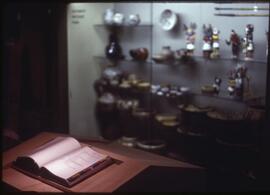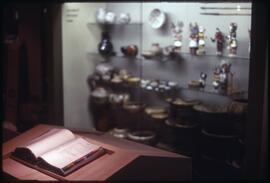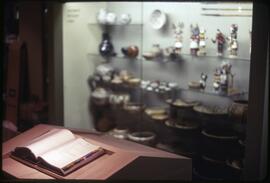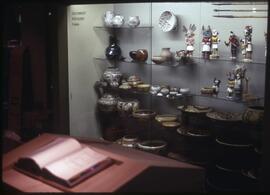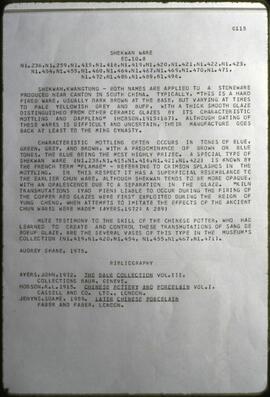
Image of a page, likely from a catalogue in visible storage that was available for visitors to gain further information on the items on display. This page deals with "Shekwan Ware"; a distinct type of Chinese pottery, and was written by Audrey Shane.
Pottery
37 Archival description results for Pottery
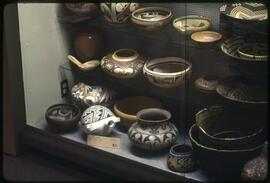
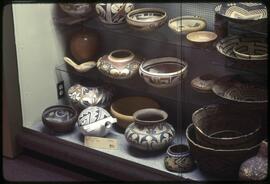
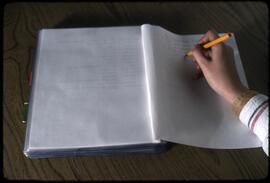
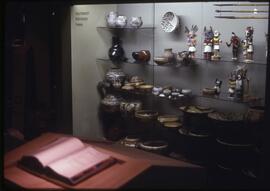
A display in the visible storage area of the Museum of Anthropology with a catalogue open on a table in front of it. This photograph was likely taken to demonstrate the new system where museum catalogues would be available to visitors in order to get information on the items on display. The display is on the southerwestern United States and features Pueblo and Hopi pottery and Kachina figures.
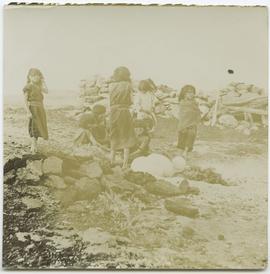
Photograph of a group of Hopi women (whom Maude identifies using the outdated term Moki) baking pottery at Orau (?).
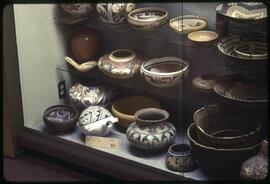
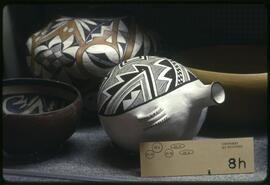
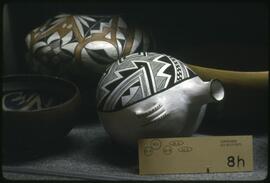
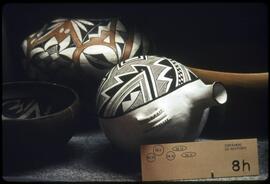
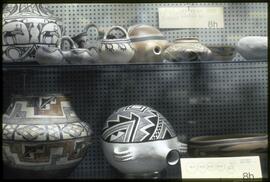
Hopi and Pueblo pottery on display in visible storage in the Museum of Anthropology.
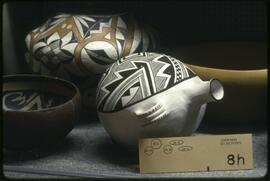
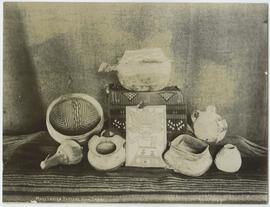
Photograph depicts various kinds of Hopi pottery, including bowls, jugs, what appears to be a rattle, and a tablet.
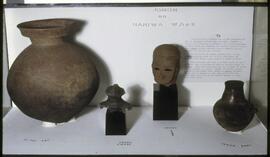
Display for the Museum of Anthropology. Uncertain relation to exhibits. Possibly for Japanese and Chinese history exhibit that may have been in place between 1967 and 1969. Shows Jomon and Haniwa pottery and figures.
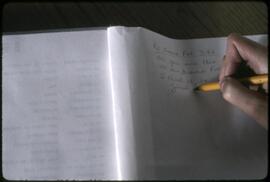
Image of a museum staff member writing notes on a catalogue entry for item D4.6. The note questions the identification of a pottery item as originating from the Acoma culture and posits that the item originated from the Zuni culture.
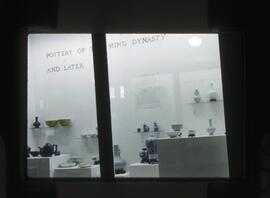
Display for the exhibit "Chinese Values." Shows numerous examples of pottery including bowls, cups, teapots and other items. Items for this exhibit were borrowed from numerous individual donors under the direction of Dr. Ping-ti Ho.
Pueblo pottery on display in visible storage in the Museum of Anthropology.