
Title and statement of responsibility area
Title proper
General material designation
Textual record
Graphic material
Parallel title
Other title information
Title statements of responsibility
Title notes
- Source of title proper: Title based on provenance of fonds
Level of description
Reference code
Edition statement
Edition statement of responsibility
Statement of scale (cartographic)
Statement of projection (cartographic)
Statement of coordinates (cartographic)
Statement of scale (architectural)
Issuing jurisdiction and denomination (philatelic)
Dates of creation area
Date(s)
-
[189-] - [200-], predominant [193-] - [197-] (Creation)
- Creation
- Harry Bertram Hawthorn
Physical description area
Physical description
30 cm of textual records and graphic materials
Publisher's series area
Title proper of publisher's series
Parallel titles of publisher's series
Other title information of publisher's series
Statement of responsibility relating to publisher's series
Numbering within publisher's series
Note on publisher's series
Archival description area
Name of creator
Biographical history
Harry B. Hawthorn was born in Wellington, New Zealand in 1910. He completed his B.Sc (1932) and M.Sc. (1934) with the intention of becoming a civil engineer. During the Depression Hawthorn worked for New Zealand's Native School Service. Unable to pursue his studies in science in the small communities in which he worked, he became interested in the humanities, studying history extra-murally. He earned his B.A. in 1937. The years spent in the Native School Service had an arguably strong influence on Hawthorn. He was offered and accepted a fellowship to study anthropology at the University of Hawaii in 1938. The following year he was offered another fellowship to study anthropology at Yale University where he completed his PhD in 1941. While there he met Audrey Engel who later became his wife.
Hawthorn's appointment to the faculty of the University of British Columbia in 1947 added Anthropology to the title of the Dept. of Economics, Political Science and Sociology. His objectives upon coming to UBC were to: establish his discipline in an academic setting of the University and in the Province; to offer anthropology as a contribution to the general education of a broad group of students and to begin the selection and training of a few specialists; to establish problems for ethnological research; and, in keeping with conviction that scholarship should be useful as well as decorative, to discover possibilities for the practical application of anthropology in the Province and the country.
In 1949, Hawthorn was asked by the Provincial Government to undertake a study of the problems confronting Doukhobors in British Columbia. He assembled a team of scholars from various disciplines to investigate different aspects of the issue. The subsequent report (1955), helped to ameliorate the Doukhobors and encouraged increased cooperation among the Doukhobors, non-Doukhobors and the government. It also proved to be a valuable experience for members of the research team. In 1954, the Department of Citizenship and Immigration commissioned a comprehensive study of B.C. Indians. Hawthorn again assembled a research team which completed its study in 1956. In that same year Anthropology, Sociology and Criminology separated from Economics and Political Science to form a new department with Hawthorn as its head, a position which he held until 1968. Hawthorn undertook direction of a third large-scale interdisciplinary research project in 1963 -- The Survey of Contemporary Indians of Canada (1966, 1967). The project not only influenced the development of native affairs in Canada but also contributed to development of Canadian anthropology by providing practical and research experience for a number of young scholars.
In addition to the above-described activities, Hawthorn and his wife Audrey also played a significant role in the development of the UBC Museum (later the Museum of Anthropology) and, in particular, the development of an outstanding collection of West Coast native artifacts.
Hawthorn served as a member of the UBC faculty until his retirement in 1976. He died in 2006.
Custodial history
Scope and content
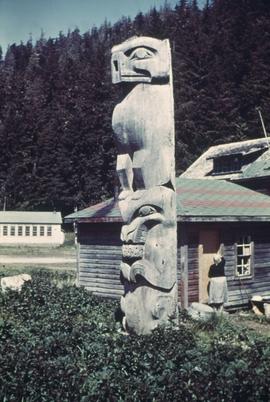
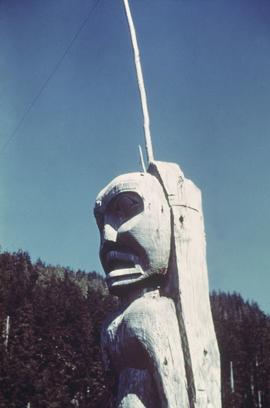
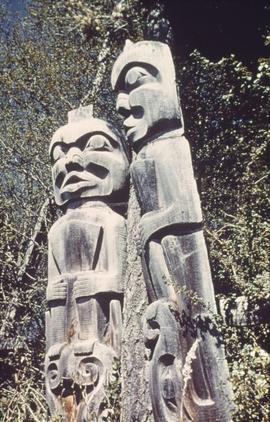
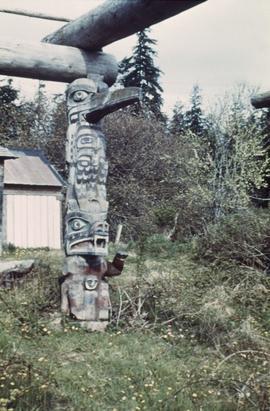
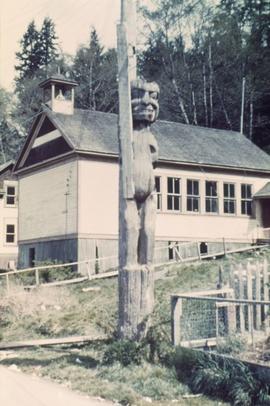
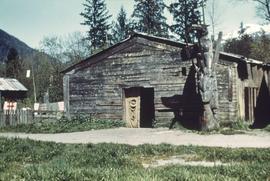
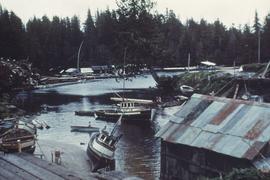
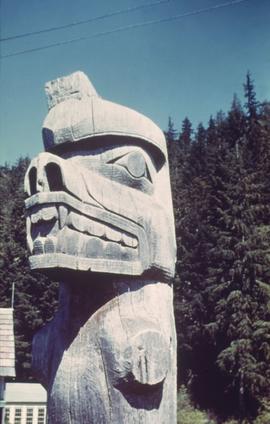
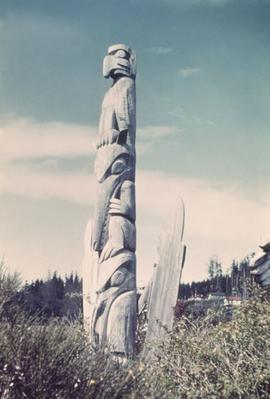
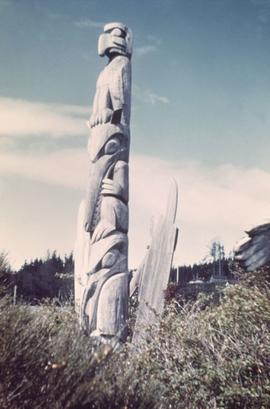
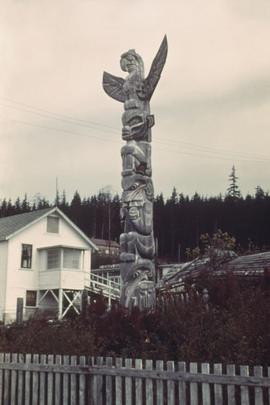
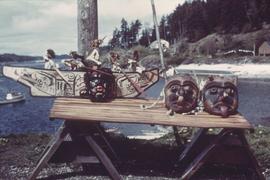
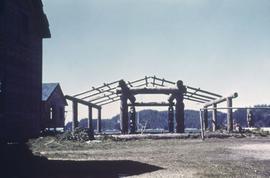
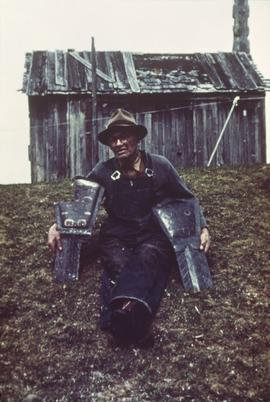
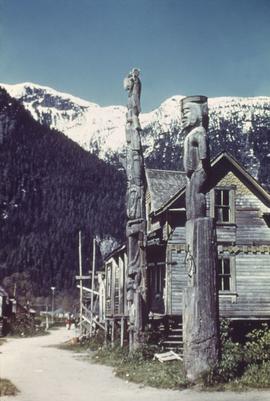
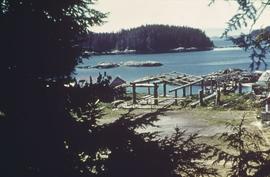
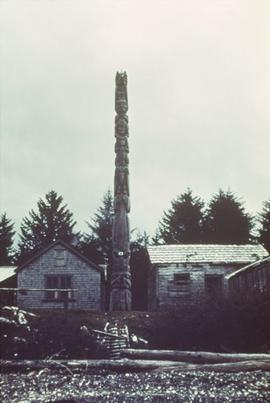
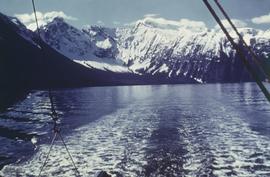
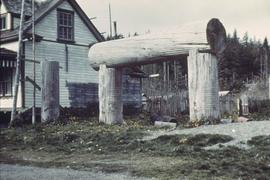
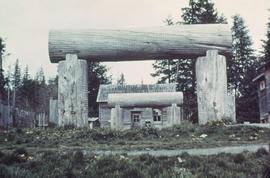
The fonds consists of records created and collected by Harry B. Hawthorn in a number of different capacities: as researcher, professor, Dean of Anthropology and Director of the Museum of Anthropology. Textual records in the fonds include correspondence, transcripts, research notes and clippings from publications. Much of the graphic materials relate to Harry Hawthorn’s interactions with Indigenous communities as an anthropologist, a professor, and as the Director of MOA. Other images relate to his personal life, documenting his youth in New Zealand, his life as a father and anthropologist, and his later established professional roles.
Notes area
Physical condition
Immediate source of acquisition
Most of the records were found in the Museum of Anthropology archives. Accessions were received in 2008 and 2011 from Henry Hawthorn, Harry Hawthorn's son.
Arrangement
The fonds is arranged into the following two series: 1. UBC and Anthropological Research and 2. Personal Life
Language of material
Script of material
Location of originals
Availability of other formats
Restrictions on access
Terms governing use, reproduction, and publication
Finding aids
Associated materials
Other pertinent materials may be found in the Museum of Anthropology's Audrey Hawthorn fonds. The University of British Columbia Archives also has material relating to Harry B. Hawthorn’s research and correspondence.
Accruals
Rights
Copyright held by Museum of Anthropology.
Alternative identifier(s)
Standard number
Standard number
Access points
Subject access points
Place access points
Name access points
- Audrey Hawthorn (Subject)
Genre access points
Control area
Description record identifier
Institution identifier
Rules or conventions
Status
Level of detail
Dates of creation, revision and deletion
Created November 20, 2015 by Katie Ferrante, based on original finding aid by Y.M. Chong made in June 2001.