Nuučaan̓ułʔatḥ (Nuu-chah-nulth)

Elements area

Taxonomy

Code

Scope note(s)

    Source note(s)

      Display note(s)

        Hierarchical terms

        Nuučaan̓ułʔatḥ (Nuu-chah-nulth)

        Nuučaan̓ułʔatḥ (Nuu-chah-nulth)

        Equivalent terms

        Nuučaan̓ułʔatḥ (Nuu-chah-nulth)

        • UF Nootka

        • UF Nootka

        • UF Nuuchahnulth

        • UF Nutka

        • UF Nuu-chah-nulth

        Associated terms

        Nuučaan̓ułʔatḥ (Nuu-chah-nulth)

          210 Archival description results for Nuučaan̓ułʔatḥ (Nuu-chah-nulth)

          134 results directly related Exclude narrower terms
          A bone game, "La-hal"
          148-02-a035833 · Item · 1975 or 1976
          Part of Kyuquot: Village by the Sea collection

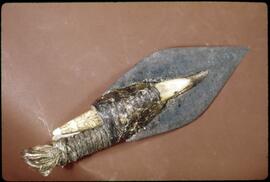
          An image of two men sitting, one holding unidentifiable objects in his hands and another holding a drum. According to the documentation included with the filmstrip, the description of the image states that a man "shows the other team which hand holds the unmarked bone."
          A bone game, "La-hal"
          148-02-a035832 · Item · 1975 or 1976
          Part of Kyuquot: Village by the Sea collection

          An image of two men sitting and chanting while one man beats a drum, other people stand by. According to the documentation included with the filmstrip, the description of the image states that three men "... play La-hal. One man beats the drum while other two chant and hide the bones from their opponents. (You can learn to play La-hal from the enclosed sheet.)"

          25-03-11-a038168 · Item · August 1972
          Part of Anthony Carter fonds

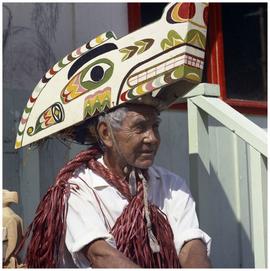
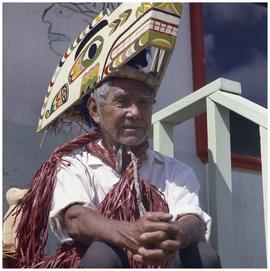
          Image of Able John wearing a mask. An image of John is printed on page 119 of Carter's book "From History's Locker," with the caption: "Able John, born at Ehahsitaht but now living at Gold River. A friendly happy man he carves authentic Nootka masks to supplement his the earnings."

          Anthony Carter
          25-03-11-a038167 · Item · August 1972
          Part of Anthony Carter fonds

          Image of Able John wearing a mask. An image of John is printed on page 119 of Carter's book "From History's Locker," with the caption: "Able John, born at Ehahsitaht but now living at Gold River. A friendly happy man he carves authentic Nootka masks to supplement his the earnings."

          Anthony Carter
          An Elder of Kyuquot
          148-02-a035848 · Item · 1975 or 1976
          Part of Kyuquot: Village by the Sea collection

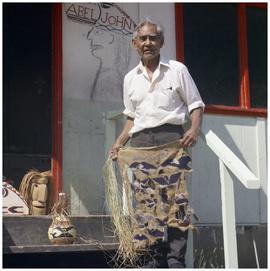
          A close-up image of an elderly person. According to the documentation included with the filmstrip, the description of the image states that the man stands "in front of a store."

          At Rugged Point Beach
          148-02-a035838 · Item · 1975 or 1976
          Part of Kyuquot: Village by the Sea collection

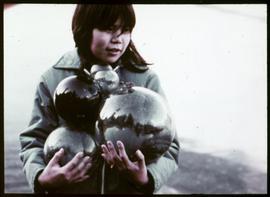
          An image of a child holding glass balls of different sizes. According to the documentation included with the filmstrip, the description of the image states "Diane Jack holds glass balls found on Rugged Point beach. Every year thousands of these fish floats are lost by Japanese fishermen. They float over from Japan on the Japanese Current, and the surf throws them onto the beaches of the West Coast of North America."

          Balancing on a log
          148-02-a035829 · Item · 1975 or 1976
          Part of Kyuquot: Village by the Sea collection

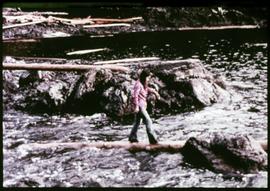
          An image of a child standing on a log in water, surrounded by rocks. According to the documentation included with the filmstrip, the description of the image states "Gina Sutherland balances on a log at outside beach."

          Barrie Reynolds
          29-2-30 · File · 1970
          Part of Wilson Duff fonds

          This file contains a letter and attached report written by Wilson Duff at the request of Barrie Reynolds, chief ethnologist at the National Museum of Man [Canadian Museum of History]. The contents relate to the valuation of a collection of Northwest Coast cultural belongings and other items that a Mr. Birmingham intended to sell to the museum. Duff provides an overarching analysis of the collection and comments on the discrepancies between (1) museum valuation and its emphasis on ethnological information, and (2) an art market in which investors view objects and belongings based on aesthetic qualities and their potential as investment pieces.

          Basket Maker
          148-02-a035844 · Item · 1975 or 1976
          Part of Kyuquot: Village by the Sea collection

          An image of a woman holding a basket and a bundle of dried grass. According to the documentation included with the filmstrip, the description of the image states "In the Fall Mrs. Oscar gathers and dries grass from Rugged Point to use in making her grass and cedar baskets."

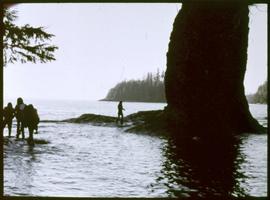
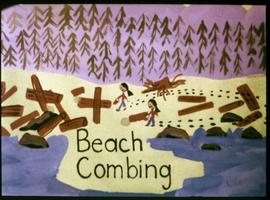
          Beach Combing
          148-02-a035835 · Item · 1975 or 1976
          Part of Kyuquot: Village by the Sea collection

          An image of people wading in the water on a beach. According to the documentation included with the filmstrip, the description of the image states "Beach Combing near the Western entrance."

          Canoe label
          1-4-A-34 (24.5) · File · [ca. 1985]
          Part of William McLennan (MOA Curator) fonds

          File contains information about the Northwest Coast canoe including how they're made, their importance, and their history. There are also photocopied images of canoes from the Nuu-chah-nulth and the Kwakwaka'wakw communities.

          Carol F. Jopling
          29-2-21 · File · 1975
          Part of Wilson Duff fonds

          This file contains a letter to Wilson Duff, written by Carol F. Jopling, requesting reference letters from Duff in order to apply for funding from the American Philosophical Society and the Arctic Institute of North America. Also included are Jopling's application materials. As discussed in the letter, Jopling sought funding to study Nuu-chah-nulth and Kwakwaka'wakw coppers. She expresses an interest in connecting these to slaves and unsubstantiated claims about cannibalism among these peoples. She also proposes to look into the importance of sea otters as seen in the symbolism of material culture.

          Application materials suggest a different research interest, specifically looking at the material and technology used in producing these coppers to substantiate whether copper production was a local innovation or of European import.