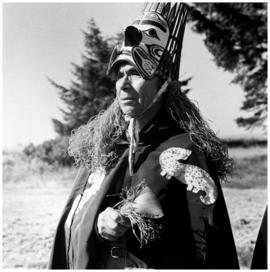
Johnny Williams returning headdress to Yuquot - Jimmie John
- 25-03-11-a038130
- Item
- [1972?]
Parte de Anthony Carter fonds
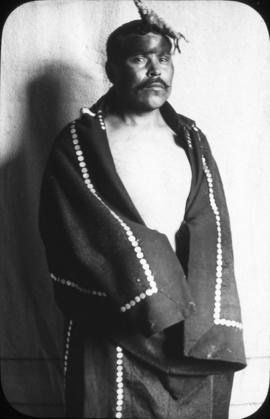
Image of an older man (possibly Mr. Wilson) wearing traditional robes and mask of the Nuu-chah-nulth
Sem título


Johnny Williams returning headdress to Yuquot - Jimmie John
Parte de Anthony Carter fonds
Image of an older man (possibly Mr. Wilson) wearing traditional robes and mask of the Nuu-chah-nulth
Sem título
Parte de Robert Reford fonds
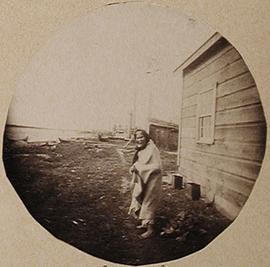
Item is an image of a woman by a building. There are some buildings, poles, and canoes in the background. According to annotations, photograph was taken in G?aw (also known as Old Massett) in the Haida Gwaii archipielago
Parte de Beatrice Pilon fonds
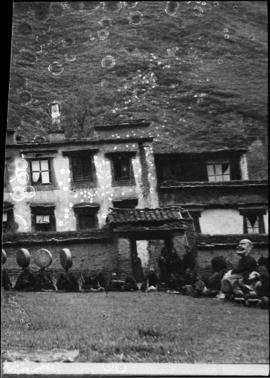
Image depicts a large Tibetan building, possibly a temple or a monastery. Traditional Tibetan architectural features visible here include a structure with multiple windows to let in sunlight and a flat roof to preserve heat. These dwellings are often constructed with a combination of wood, rocks, cement, and earth. Several figures are seated in front of this dwelling near a row of drums.
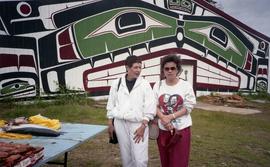
Two women in front of Alert Bay Community House
Parte de Thomas and Mildred Laurie collection
Two women stand in front of the Alert Bay Community House. To the women's right is a table that appears to hold barbecued salmon. The painted wall of the Community House can be seen in the background.

Page 12 - Coast Salish population, continued
Parte de Wilson Duff fonds
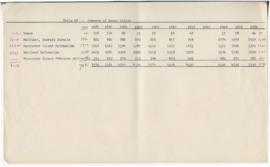
Page 18 - Summary of Coast Salish population
Parte de Wilson Duff fonds
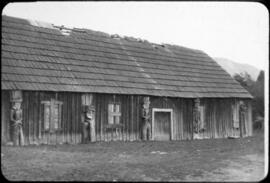
Parte de MOA General Media collection
The caption on this slide simply states "Coast Salish." A possible second caption on a sheet of paper states "Alert Bay Big House." A unique aspect of this house is that what once were interior house posts have been moved to the exterior of what was likely a later structure. This photograph may have been used in a book by Marius Barbeau or Edward Linnaeus Keithahn.
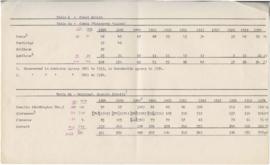
Page 11 - Coast Salish population
Parte de Wilson Duff fonds
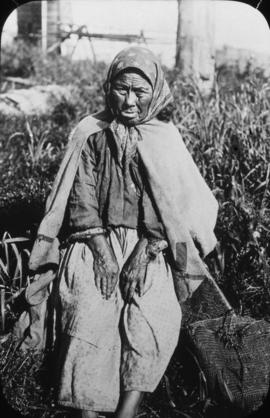
Photograph of an elder Haida woman
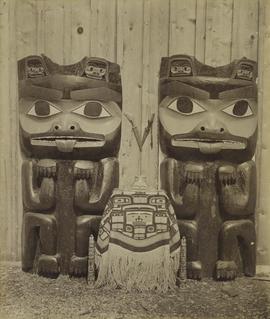
Grizzly Bear House interior posts
Parte de Reverend Thomas Crosby fonds
Image depicts interior posts of the Grizzly Bear House, Masset, B. C. (same as in a039354). The posts are displayed with a Chilkat blanket, painted hat, and two daggers that probably belonged to Xa’na. The Chilkat blanket is draped over a box that may be the coffin box of Xa’na. Printed below the image is "R. Maynard, Artist". Printed on the verso is the photographer information with the inscription "R. Maynard, Photographic Artist, AND DEALER IN ALL KINDS OF PHOTOGRAPHIC MATERIALS, COR. OF DOUGLAS AND JOHNSON STS., VICTORIA, B. C. -- Views of British Columbia and Vancouver Island for Sale." A handwritten inscription reads "Indian Totems."
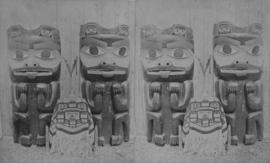
Grizzly Bear House interior posts
Parte de Reverend Thomas Crosby fonds
Image depicts interior posts of the Grizzly Bear House, Masset, B. C. (same as in a039368). The posts are displayed with a Chilkat blanket, painted hat, and two daggers that probably belonged to Xa'na. The Chilkat blanket is draped over a box that may be the coffin box of Xa’na. Printed around the border of the image is the photographer information "PHOTOGRAPHED BY R. MAYNARD, VICTORIA, . . . B. C." Handwritten inscription on the border reads "Indian carvings". Printed on the verso is the photographer information with the inscription "R. Maynard, Photographic Artist, AND DEALER IN ALL KINDS OF PHOTOGRAPHIC MATERIALS, COR. OF DOUGLAS AND JOHNSON STS., VICTORIA, B. C. -- Views of British Columbia and Vancouver Island for Sale." A handwritten inscription reads "No 20".
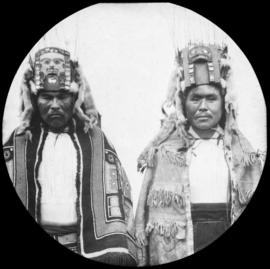
Two Haida chiefs wearing blankets and headdresses.
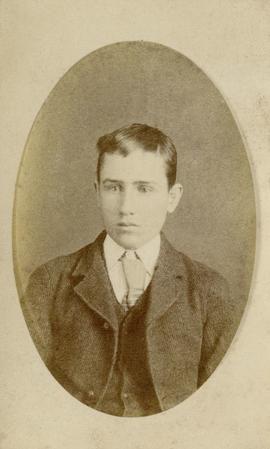
Parte de Reverend Thomas Crosby fonds
Image is a head and shoulders portrait of a boy. Photographer information printed on verso with the inscription "Geo. Kirton, Photographer, Woodstock, ONT. Rooms on Ground Floor, opp. the Market".
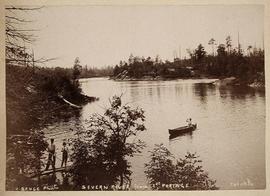
Severn River from First Portage
Parte de Robert Reford fonds
Item is an image of a river. There are three people standing by the shore and one person paddling in a canoe towards them. According to annotations, photograph was taken by J. Bruce at the Severn River by the first portage
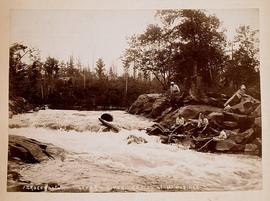
Severn River Rapids at First Portage
Parte de Robert Reford fonds
Item is an image of a river with four people by the shore. According to annotations, photographs was taken by J. Bruce, the river is Severn River at the First Portage
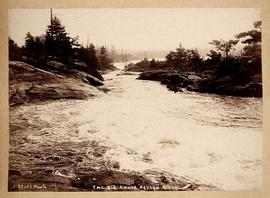
Parte de Robert Reford fonds
Item is an image of a river. According to annotations, photograph was taken by J. Bruce and it depicts the "Big Chute" in the Severn River
Parte de Robert Reford fonds
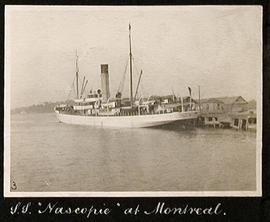
Item is an image of a ship in a harbour. According to annotations, photograph was taken at Montreal, Quebec
Parte de Eric Parker fonds
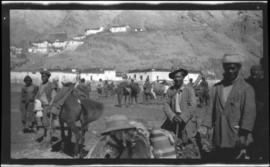
Item is a negative showing a group of men and horses standing in front of an unidentified village.
Parte de Eric Parker fonds
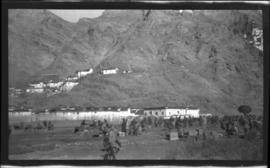
Item is a negative showing a group of men and horses milling in front of an unidentified village. There are mountains in the background.