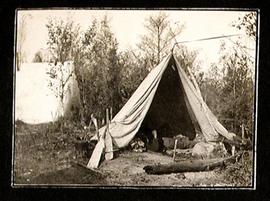
Item is an image of a camp with a tent in the background and an open tent in the foreground. According to annotations, photograph was taken on the Hayes River between York Factory and Norway House, Manitoba
Rivers
100 Archival description results for Rivers
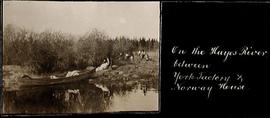
Item is an image of a boat and several people at a shore. According to annotations, photograph was taken on the Hayes River between York Factory and Norway House, Manitoba
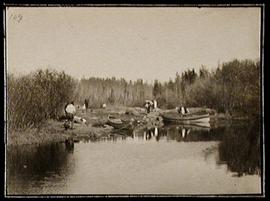
Item is an image of two boats and some people at a shore. According to annotations, photograph was taken on the Hayes River between York Factory and Norway House, Manitoba
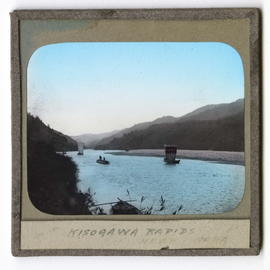
Item is a photograph of boats on a river between mountains. Reads, "KISOGAWA RAPIDS NEAR NARA."
Image of two young Musqueam boys kneeling down at the edge of the Fraser River. The boys are facing away from the camera. A different image of the same scene is printed on page 59 of Carter's book "Abundant Rivers."
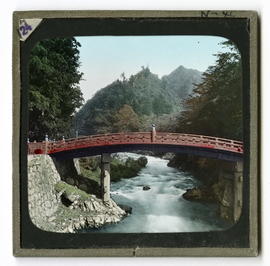
Anthony CarterItem is a photograph of a bridge over a river. [Sacred bridge at Nikko]. Mountain and trees appear in background. Possibly by photographer Kozaburo Tamamura
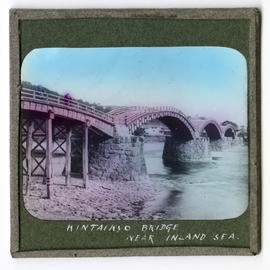
Item is a photograph of a bridge over water. Some buildings appear in the background. Reads, "KINTAIKYO BRIDGE NEAR INLAND SEA."
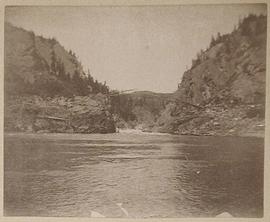
Item is an image of a bridge over a river. According to annotations, the bridge was made by the indigenous peoples in the area and the location may be the Skeena River.
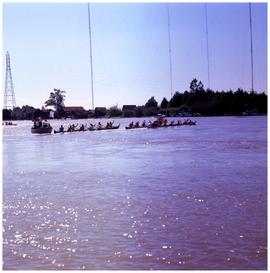
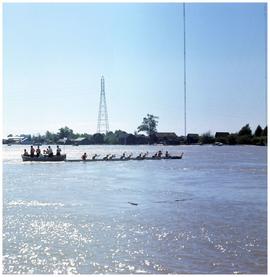
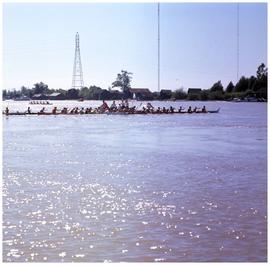
Image of three or four long canoes full of rowers on the Fraser River
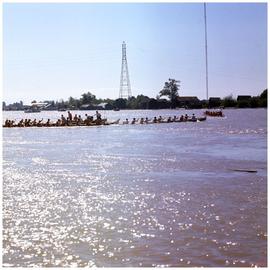
Anthony CarterImage of canoes on the Fraser River, possibly part of a race.
Anthony CarterImage of two canoes on the Fraser River, possibly part of a race.
Anthony CarterImage of canoes on the Fraser River, possibly part of a race.
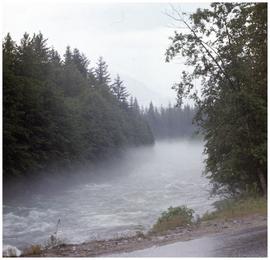
Anthony CarterImage of the Capilano River, seen from the road.
Anthony CarterItem is a negative showing a man, Lt. Parker standing in front of his horse next to a river. Parker is faced away from the camera and is looking across the river. There are mountains in the background.
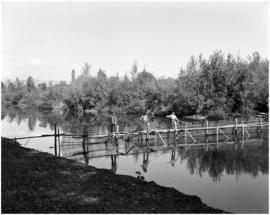
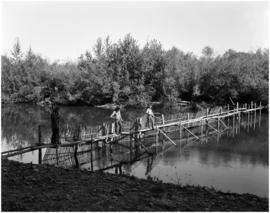
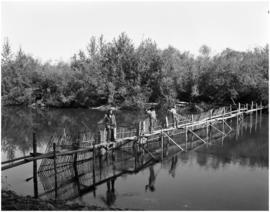
Image of three individuals standing on the platform of a fishing weir on the Cowichan River, holding spears. A similar image is printed on page 15 of Carter's book "From History's Locker," with the caption: "Salmon weir on the Cowichan river, the native people continue a very ancient form of spear fishing for migrating salmon. The weir is not a trap but merely a means to slow the fish on the way up the river."
Anthony Cartermage of three individuals standing on the platform of a fishing weir on the Cowichan River, holding spears. A similar image is printed on page 15 of Carter's book "From History's Locker," with the caption: "Salmon weir on the Cowichan river, the native people continue a very ancient form of spear fishing for migrating salmon. The weir is not a trap but merely a means to slow the fish on the way up the river."
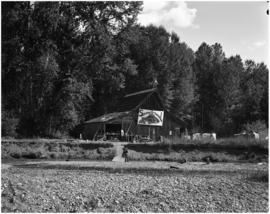
Anthony CarterImage of a wooden building with a sign hanging from the front of it that says "Salmon for Survival." The building appears to be a place where salmon is processed, dried, and/or sold. It is located next to a creek or low lying river.
Anthony CarterImage of a salmon weir on the Cowichan River, Vancouver Island. The weir is seen from a slight distance up or down the river.
Anthony Carter